
The Award dinner will be held on Thursday, October 15 at 5:30 pm in Towson University, Science Complex Room 4230.
Unanticipated complexities of organic compound reactions in chlorinated water: You only see what you look for
John D. Sivey, Professor & Chair
Department of Chemistry & Forensic Science
Towson University
8000 York Road, Towson, Maryland, USA
Abstract
When drinking water, wastewater, and water in swimming pools is disinfected with chlorine, toxic disinfection byproducts can form. For decades, environmental chemists have sought to characterize the rates, products, and mechanisms of reactions occurring when water is disinfected with chlorine. The structural diversity of natural organic matter and of organic micropollutants makes these pursuits challenging. In addition, subtle changes in water chemistry can also have pronounced impacts on organic compound halogenation. This presentation will explore these complexities and their associated lessons for designing halogenation experiments with increased precision and accuracy. The influence of specific acid catalysis and chloride catalysis on electrophilic aromatic substitution by chlorine and bromine will be examined. The propensity of co-solvents (e.g., methanol) at low concentrations to influence chlorination kinetics will also be discussed. Lastly, the ability of some halogenated aromatic compounds to undergo ipso substitution (i.e., halogen substitution) and the resultant effects on disinfection byproduct formation will be presented. Collectively, these findings highlight the need for carefully executed control experiments to test variables commonly (and sometimes incorrectly) assumed to be unimportant during investigations of halogenation in aqueous systems.
Biographical Sketch
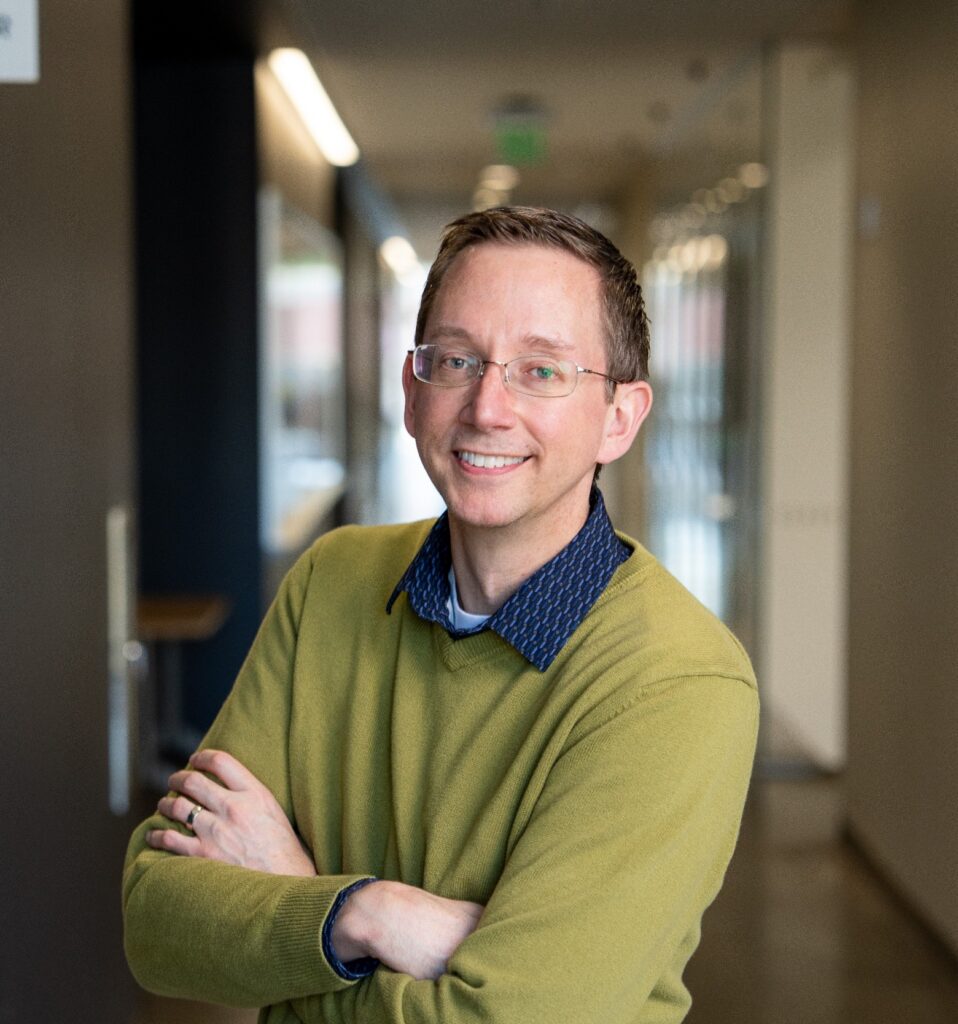
John D. Sivey was born in Saginaw, Michigan, and was raised in the agricultural community of Merrill, Michigan. After earning a B.S. in chemistry from Central Michigan University, Sivey completed an M.S. in Environmental Engineering and Science at Clemson University while conducting thesis research under the direction of Prof. Cindy Lee. Thereafter, Sivey completed a Ph.D. in Environmental Engineering and Chemistry at Johns Hopkins University in the laboratory of Prof. A. Lynn Roberts. After a postdoctoral position with Prof. William Mitch at Yale University, Sivey began an appointment as Assistant Professor of Chemistry at Towson University (TU) in 2012, where he was subsequently promoted to Associate Professor (2018) and Professor (2022). From 2021 – 2023, Sivey was Graduate Program Director for Environmental Science at TU. Since 2023, Sivey has served as Chair of the Department of Chemistry & Forensic Science at TU. Sivey’s research team focuses on environmental organic chemistry and the chemistry of disinfected waters. The Sivey Lab is particularly interested in the formation and fate of halogenated compounds in aqueous systems as well as environmental transformations of agrochemicals.
The Braude award is made possible by a generous gift from the Monique C. and George L. Braude Memorial Foundation.